
Inside this story
The most appealing detail on a small desk might be the one you can still find at the end of a busy day: a cheerful pen cup, a postcard from a friend or a little plant with a pleasing outline. Cute desk ideas work best when they belong to the way you use the space.
Start with one practical container and one personal detail. Give them a shared color, shape or material, and leave the center of the desk available for your work. You can build a distinct little corner without buying a matching set of accessories.
The aim here is a desk that looks inviting while you are using it, with a notebook open and the charging cable plugged in. An empty tabletop styled for a photograph solves a different problem.
Find the space you actually use
Before moving anything, sit down and do a familiar task. Open your notebook. Reach for the mouse or drawing tablet. Put a reference book where you would read it. Notice the places your hands keep returning to.
Keep those areas clear of decoration. The OSHA desk-layout guidance recommends room for computer equipment and frequently used items within easy reach. Its practical point for styling is straightforward: ornaments should not force essential equipment into awkward positions.
Try a paper layout before buying storage. Cut a piece of scrap paper to the footprint of a tray or lamp you are considering, then leave it in place while you work. If you keep moving it, the object probably needs a different home or a smaller footprint.
Three cute desk directions
The soft-color corner
Choose one muted color, such as sage, blush or lilac. Repeat it in two small places: a notebook and pen cup, for example. Let the rest of the desk stay in its existing wood, white or neutral tones.
A curving ceramic cup can hold pens while supplying the playful shape. One clipped postcard adds personality without claiming another patch of tabletop. If everything is patterned, make the next addition plain.
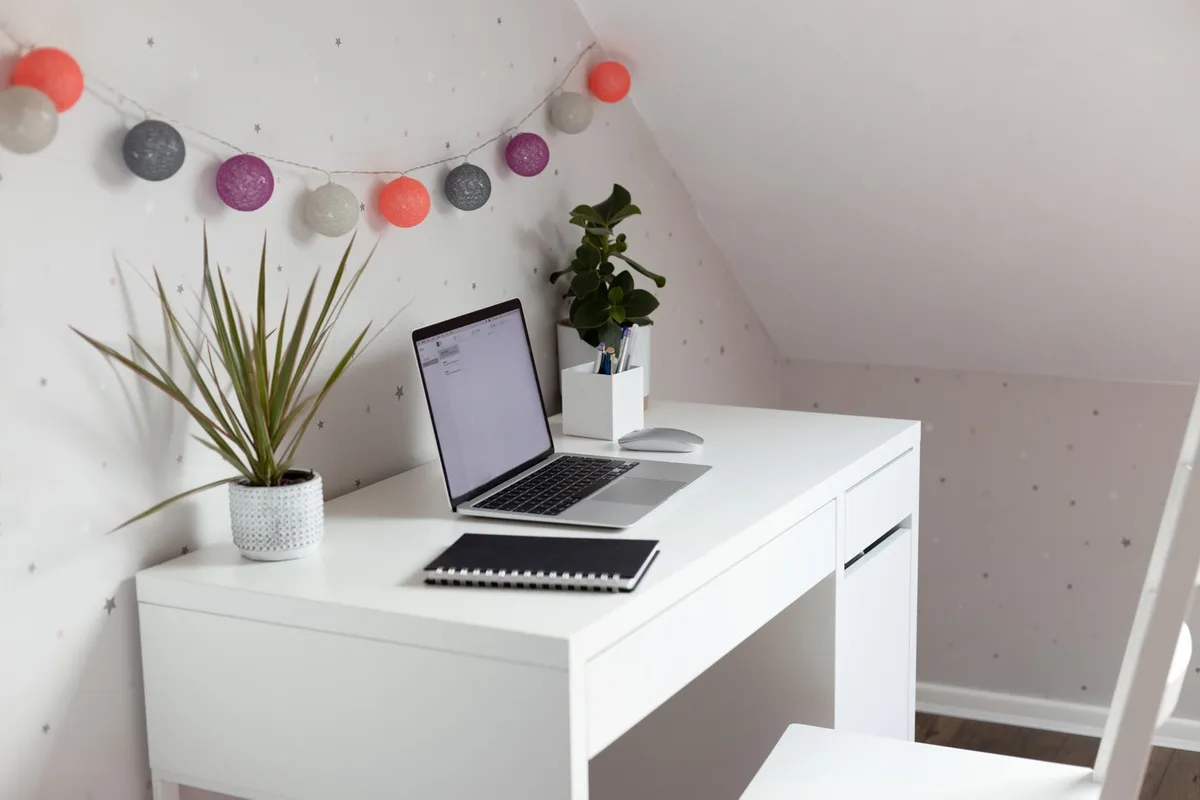
Notice the garland above the desk in the opening photograph. Moving that playful detail onto the wall leaves the work surface available. You could try a short paper-crane garland for a handmade version, positioned away from your screen and ordinary movements.
The miniature garden
Let one small plant be the focal point. Put it where its light needs are met and where you can lift it out easily for watering. Use a washable saucer or suitable protective tray, and keep water away from electrical equipment.
Repeat one leafy color in a notebook or print. You get a clear visual connection without lining up a collection of plants along the keyboard. If you enjoy a contained scene, our mini terrarium guide explains what to check before choosing one for a desk.
The little stationery shop
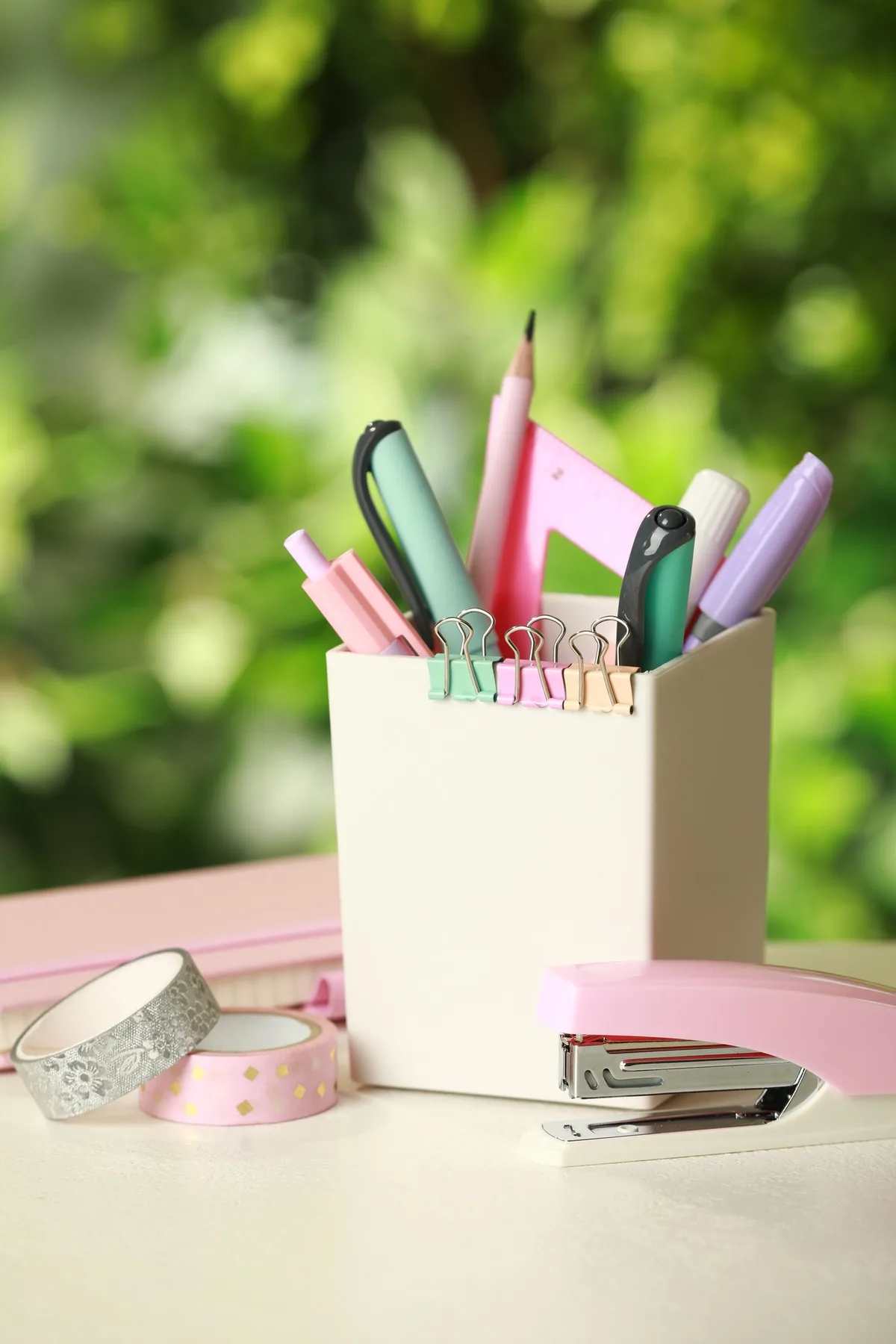
Make the tools the decoration. Gather your most-used pens in one cup, stand a few current notebooks upright and give paper clips one shallow dish. A repeated label shape or one small stripe can connect the pieces even if none came from the same shop.
Keep the display honest: a dozen beautiful pens you never use are a collection, and they may be happier on a shelf. The desk cup only needs to hold what helps with the next task.
Give the small things a job
Choose containers by their contents, then judge their appearance. A low dish that holds your everyday clips is useful; a deep pot that hides them beneath loose cables creates another search.
| What keeps wandering | A small home to try |
|---|---|
| Two favorite pens and a pencil | A narrow, stable cup |
| Clips, an eraser or a small adapter | A shallow dish you can see into |
| Current notes and one active project | One upright file or a slim tray |
| Spare charging cables | A labeled pouch off the working surface |
| A sentimental object | One visible place beyond your usual hand movement |
A container should make returning the object easy. If you need to lift three decorations to put a pen away, simplify that part of the arrangement. Open storage works well for frequently handled things; less-used supplies can leave the desktop.
Style the edges and keep the middle
Think of the back corner as a small stage. Group a taller useful object, such as the lamp, with one lower item. Leave a gap between the group and your equipment so the arrangement has a clear edge.
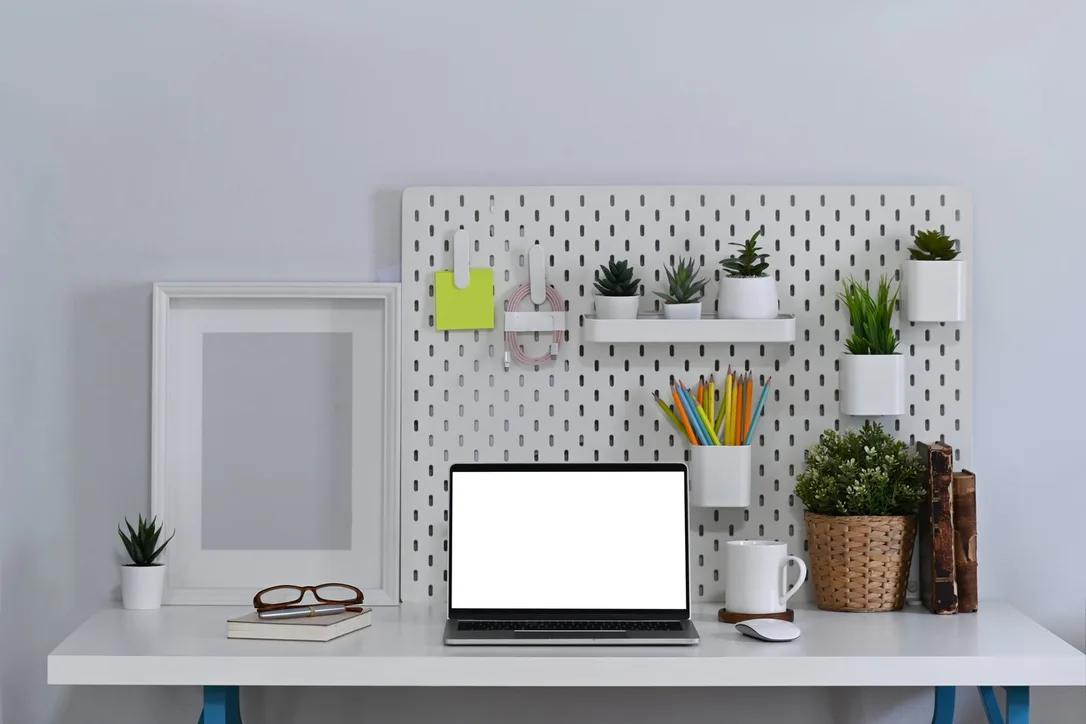
Use the wall only if it suits the room and the way you work. One securely mounted board can hold rotating pictures or notes. Put the current task where you can read it; let the decorative card sit outside that reading area. More wall storage is not automatically more helpful.
For a rented room, a freestanding frame or existing pinboard may be simpler than a new shelf. Check the surface and fixing instructions before using removable mounting products. A tiny picture is still worth placing securely.
If you want art with a sense of humor, our guide to playful illustration and framing offers a way to choose one piece rather than fill the wall at once.
Swipe to explore, or choose an example below.
Let a pegboard hold the extras
The wall becomes a place for small pots and notes. Keep the tools you reach for on the desk, and give the objects behind them a clear boundary.
Photo: prathanchorruangsak · Envato Elements License. Resized.
Give the corner one vertical detail
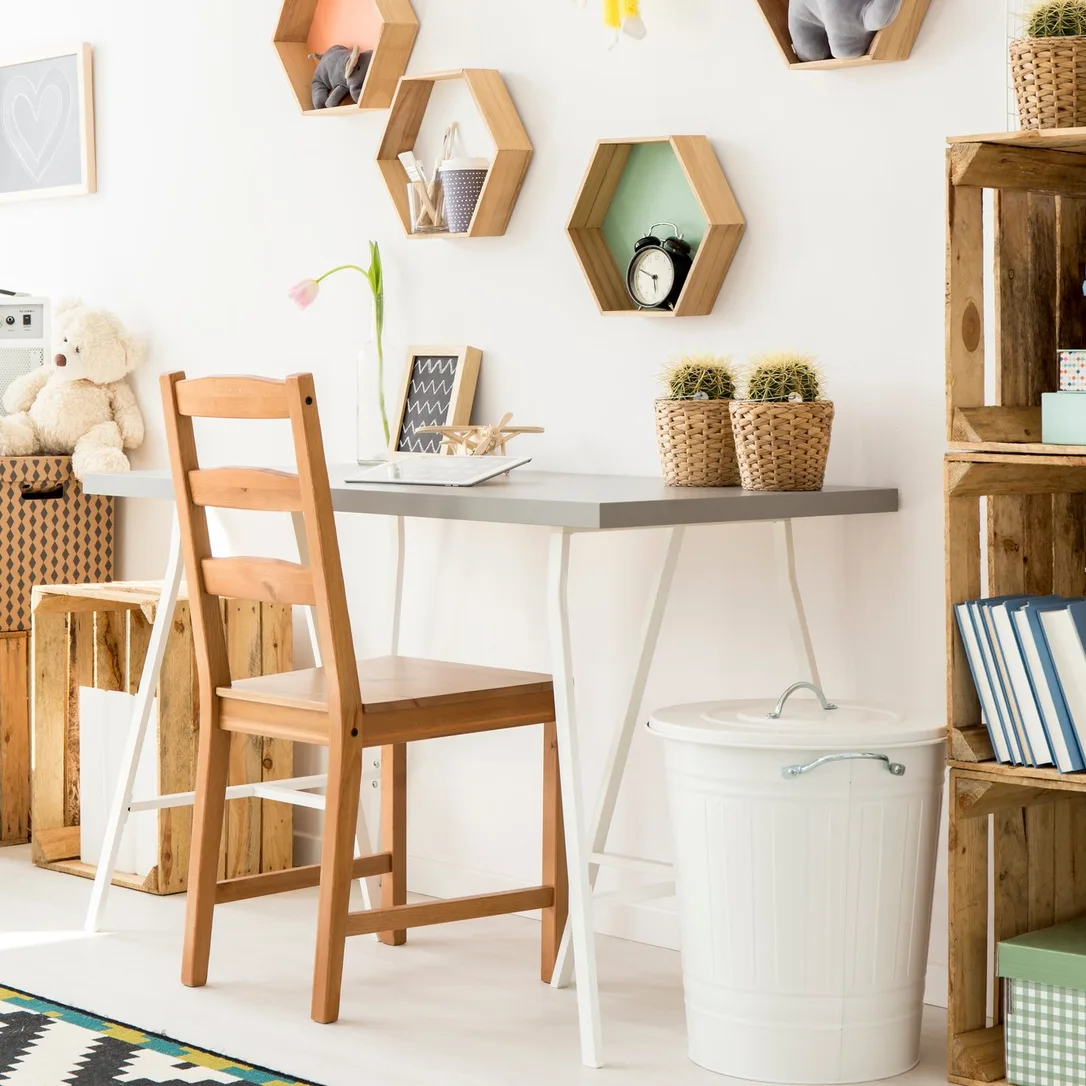
A few wall shelves add shape above a narrow surface. Copy the use of height, then adapt the objects and fixings to your room; leave the space for your legs clear.
Photo: bialasiewicz · Envato Elements License. Resized.
Try a no-shopping desk reset
- Clear the surface into three groups: things used today, things used occasionally and things kept only for display.
- Return the working essentials. Set them up for a real task before adding anything else.
- Borrow one container from elsewhere at home. Try a clean cup, small dish or box you already own.
- Choose one personal detail. A photograph, tiny model or postcard is enough to begin.
- Repeat one color. Move an existing notebook or cloth into the arrangement if it connects the pieces.
- Use the desk for a day. Move whatever gets in your way. Keep the arrangement that survives ordinary use.
Take the final photograph from your seated position. It will show you whether the attractive detail is actually visible, rather than hidden behind the screen.
Small desk questions
How do I make a desk cute on a small budget?
Start with arrangement and repetition. One existing cup, a favorite card and a notebook in a related color can create a clear direction. Buy something only after a specific missing function becomes obvious.
Can a small desk have several decorations?
Yes, if they leave the working area clear and are easy to clean around. Grouping a few details at one edge usually gives them a clearer setting than scattering them between tools.
What if two people share the desk?
Give each person a small removable tray for their personal items. Keep the shared equipment in useful positions and change the tray when the user changes. A cute corner can be portable.