Inside this story
A miniature garden is most convincing when it leaves something to the imagination. A bend in a mossy edge can suggest a path. One stone can become a hillside. The glass does the enclosing; you do not need to fill every inch inside it.
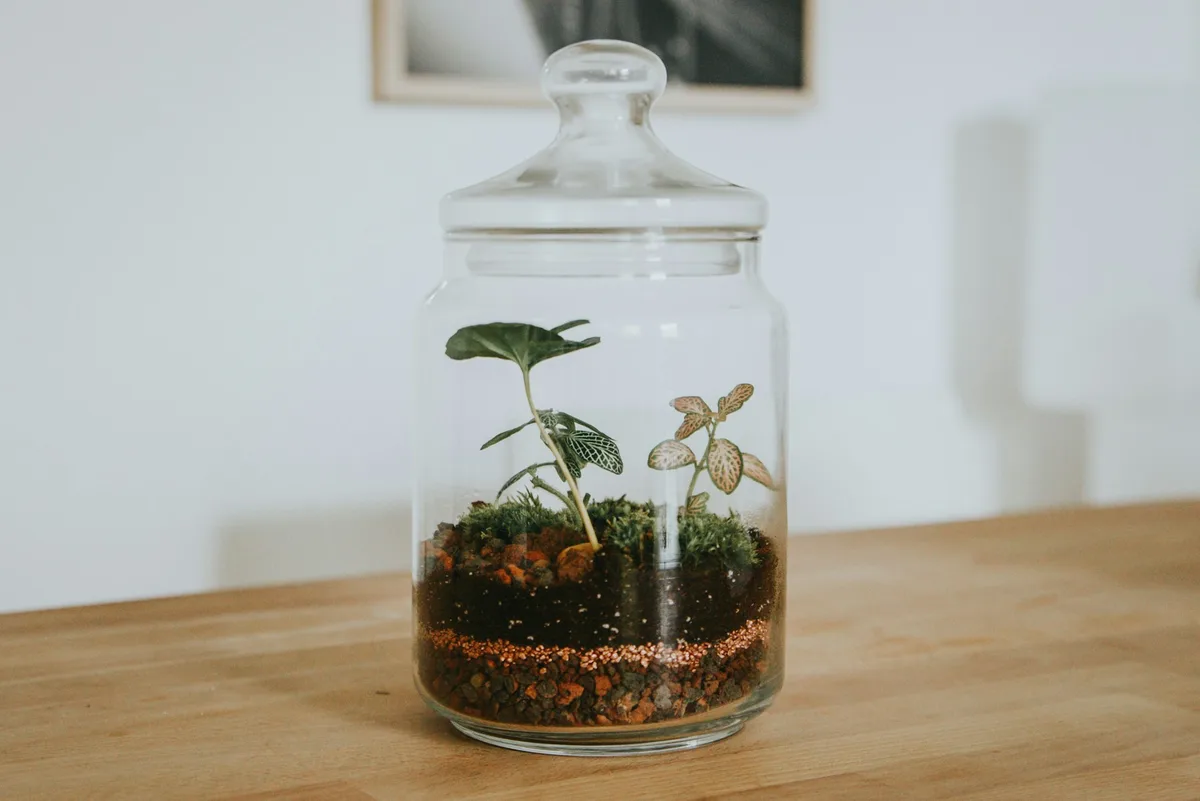
For a first mini terrarium, start with a clear, wide-opening container and a few plants suited to the same conditions. Make the scene small enough to enjoy on a shelf, but generous enough to reach into when a leaf needs removing. The tiniest bottle in the cupboard is rarely the most forgiving first project.
This guide helps you choose a setting, assemble a simple garden and notice when it needs attention. You can make it charming without buying a bag of miniature accessories.
Choose a garden your room can support
Decide where the terrarium will stand before choosing the glass. Look at the actual light in that spot through the day, and leave space above the container to lift the lid. A photograph beside a sunny window is inspiration for a composition, not proof that the position suits every plant.
The Royal Horticultural Society’s terrarium guide distinguishes humid, closed gardens from open containers. Small tropical foliage plants suit the former; succulents need the less humid conditions of an open arrangement. Choose a group with matching needs rather than mixing plants because they look lovely together.
| Your starting point | A sensible direction |
|---|---|
| A lidded jar and a suitable bright, indirect-light position | A small closed foliage garden |
| A wide-open bowl and plants that prefer less humidity | An open arrangement with care matched to those plants |
| A shelf with very little daylight | Choose a different spot or plan appropriate grow lighting first |
| A narrow bottle you cannot clean or reach inside | Save it for a later project; start with a wider opening |
Ask a plant seller about mature size as well as the size of the pot. A young plant can fit today and overwhelm the scene later. For a lidded garden, miniature ferns or suitable compact foliage plants offer more useful starting points than a mixed tray of unidentified cuttings.
For a concrete first shopping list, ask about a compact nerve plant (Fittonia), a miniature fern suited to your planned ventilation, and suitable moss. You need not fit all three into one jar. The University of Arizona’s terrarium guide discusses these plant groups and explains why an open dish garden behaves differently from a closed, humid enclosure.
Three small worlds to imagine
The woodland edge. Group the taller foliage toward the back and let low greenery form an uneven edge in front. Leave a patch of visible substrate or a single clean stone as a resting place for the eye. The suggestion of a clearing gives the garden more depth than a carpet packed with ornaments.
The little island. Place a compact cluster slightly off-center, with a visible margin around it. Turn the container before planting: the island should have a pleasing outline from the side you will usually see. This works especially well when the shape of the jar is part of the appeal.
The green study. Skip the landscape story and compare leaf shapes instead. Choose one clear focal plant, then quieter companions with compatible growing needs. Repeat a color already in the room through the container’s setting, rather than putting painted decorations into the growing space.
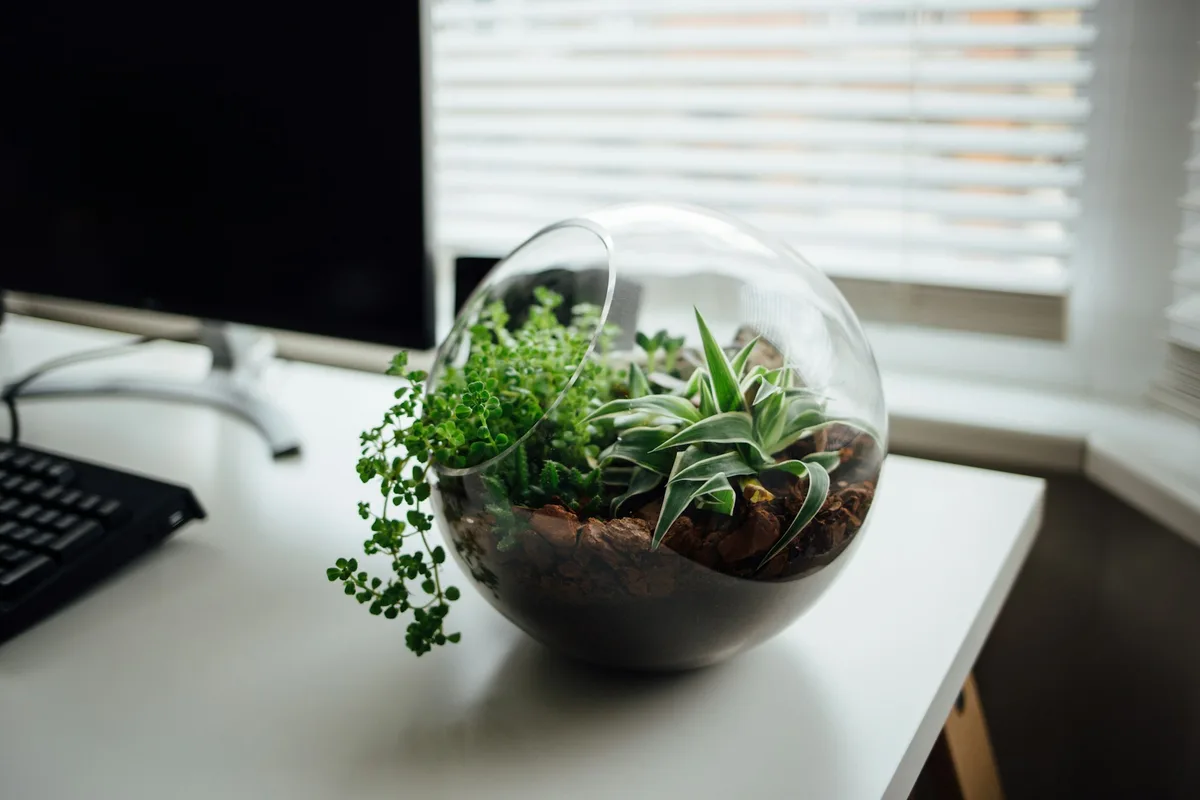
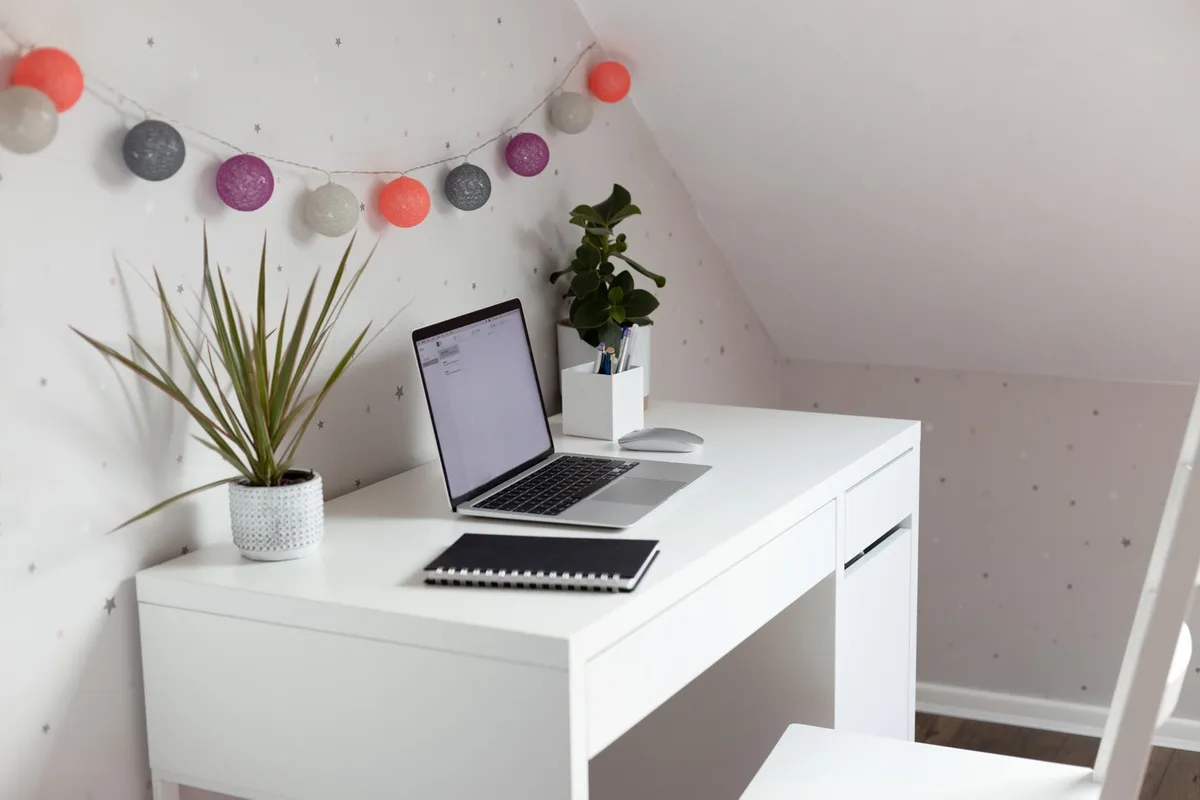
For a desk, try one garden beside one useful object, such as a pencil cup. Our small-desk styling guide helps keep the surrounding surface usable.
Put the garden together
Gather the clean container, suitable small plants, their appropriate potting mix, a spoon, a small brush and a mister. Set out any washed stones before you begin. Use nursery-grown materials or material you are allowed to collect; a pretty patch in a public woodland is not a supply shelf.
- Make a dry layout outside the glass. Place the plants beside the empty jar and choose the main viewing direction. Remove any extra plant that makes the composition difficult to read.
- Prepare the growing layers. For a closed garden, the RHS describes washed gravel beneath a suitable compost mix. Allow enough rooting depth for the actual plants. A gravel layer holds space for excess water; it does not give a sealed jar a drainage outlet.
- Position the largest root ball first. Make room for it without crushing the roots against the glass. Set the smaller companions around it and firm the mix gently.
- Add the landscape detail last. One stone or a small moss area may be enough. Keep crowns and leaves accessible rather than burying the plants beneath decoration.
- Clean the view and settle it in. Brush stray mix from the glass, water lightly as appropriate, and put the garden in its chosen position. Keep a closed foliage terrarium out of direct hot sun.
Take a photograph at this stage. It gives you a useful comparison when deciding whether a plant has outgrown its role. The scene does not have to stay exactly as planted: trimming and editing are part of keeping a small garden small.
Read the glass before reaching for water
Avoid a fixed weekly watering promise. The container, lid, room and plants affect how quickly moisture moves through the garden. Check the growing medium and foliage as well as the glass. Clemson Extension’s watering guide explains why watering frequency varies with the plant, container, growing medium and conditions.
Light condensation can be normal in a closed garden. If the view stays heavily fogged, the RHS advises opening the lid for a while or wiping away excess moisture. Remove dead leaves promptly. These observations are more useful than adding another spray every time you pass the shelf.
If the plants obscure each other, make space by pruning appropriately or moving an overgrown plant into its own pot. If the arrangement looks visually busy, remove a decorative object before removing a healthy plant. The two problems call for different decisions.
Small terrarium questions
Can I put a succulent in a closed jar?
Choose a different arrangement. The humid conditions of a closed tropical terrarium are a poor match for plants that prefer drier conditions. An open container still needs careful watering, especially when it has no outlet.
Does a cute terrarium need a miniature house?
No. Scale can come from a small leaf beside a stone or a patch of open ground. If you add an object, choose something suitable for the damp setting and leave room to maintain the plants around it.
What if I prefer flowers to foliage?
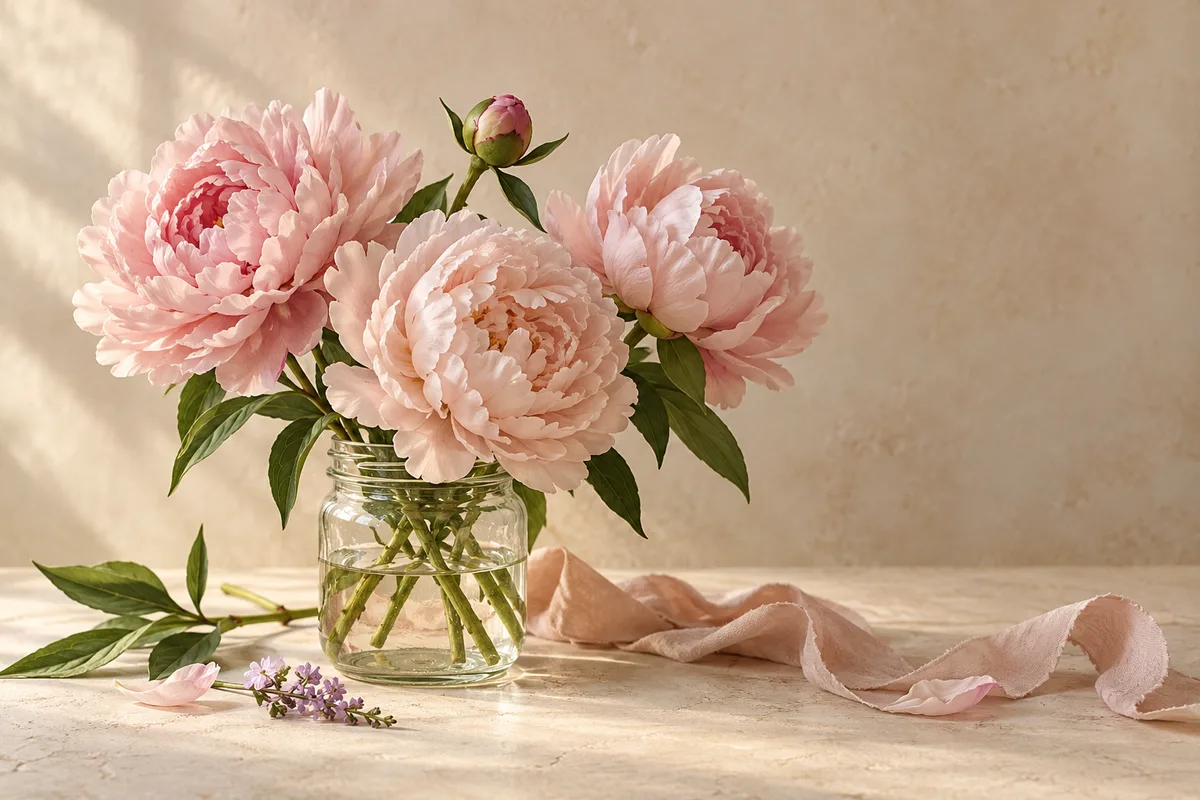
Keep the ideas separate: a small cut-flower arrangement is easier to change with the season. Try our peonies and mason jars guide for a temporary display, and let the terrarium be a slower-growing little world.