Inside this story
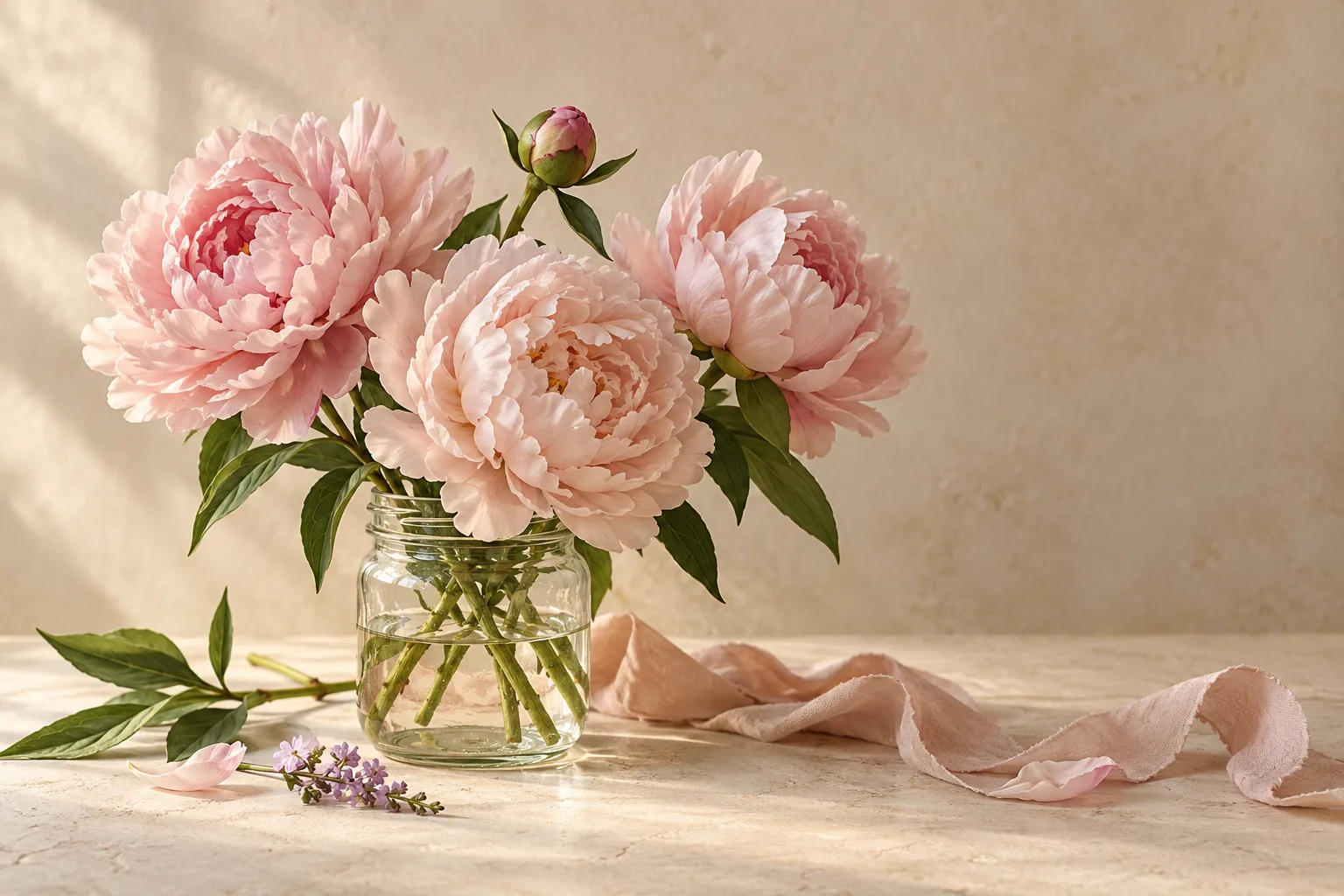
A peony can make an ordinary jam jar look like the most considered object in the room. Its generous petals bring the drama; the clear glass brings everything back down to earth. You do not need a matching vase collection or a table full of flowers to make this combination work.
This is a small-arrangement guide for a shelf, breakfast table or bedside corner. Start with a few stems, leave yourself room to adjust, and let the flowers look like flowers rather than trying to force a perfect dome.
Choose a jar that supports the stems
Look at the opening before the size of the jar. A narrower mouth helps a few stems lean against one another. A wide opening can work too, but a single flower may drift to the side instead of standing where you want it.
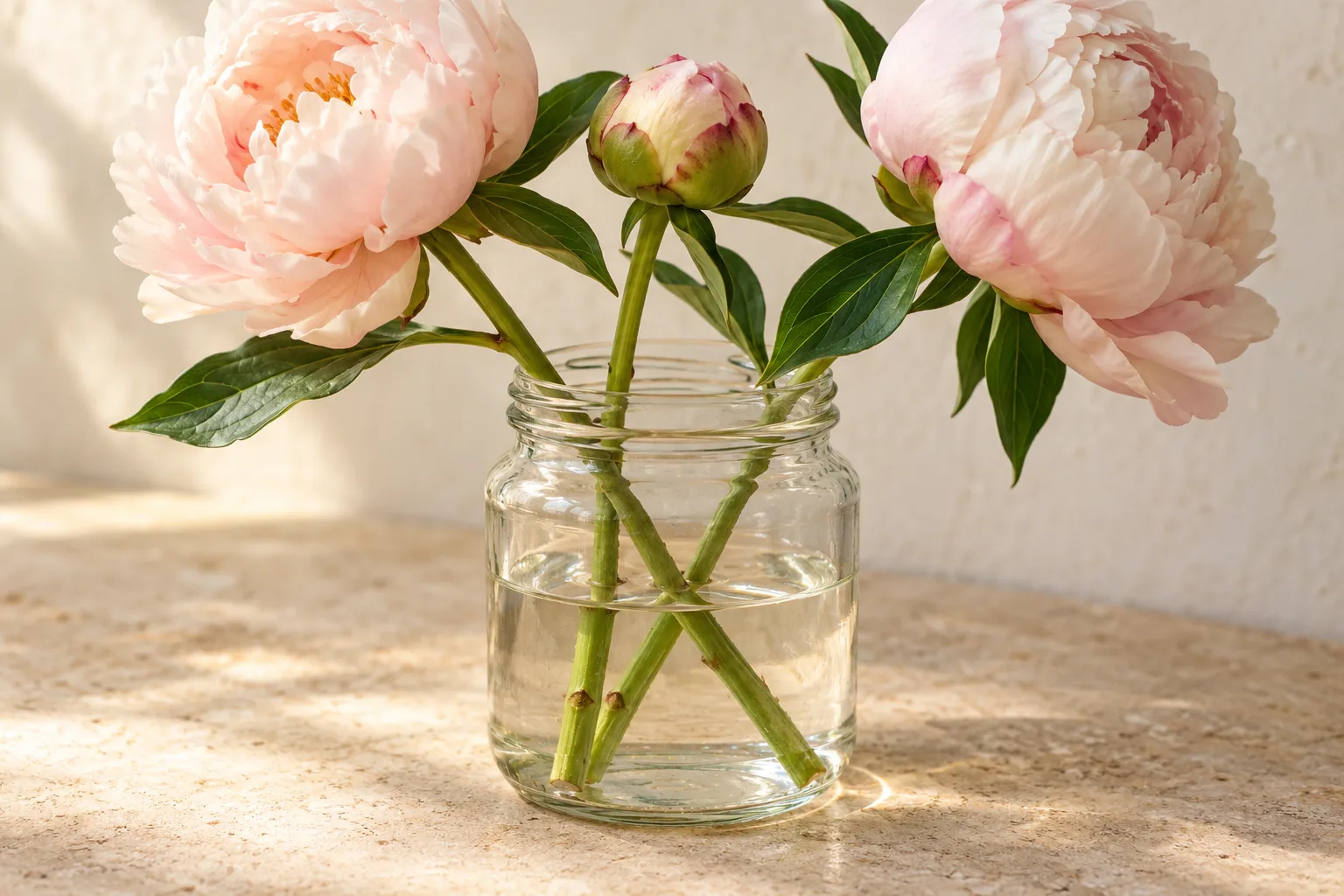
Set the empty jar in its intended spot first. At a dining table, sit down and check the sight line across it. On a narrow shelf, make sure the blooms will have room to open without brushing a wall or an object you use every day. A jar that is too tall for the location is not improved by adding more flowers.
Wash the container thoroughly. Remove a sticky label if it distracts from the stems, or keep a beautiful old label as part of the composition. For a simple look, leave the glass bare rather than tying on several competing decorations.
Build a loose arrangement
Choose a leading flower and hold it beside the jar before making your first cut. Picture where the head will sit in relation to the rim. Trim cautiously: you can shorten a stem again, but you cannot add the length back.
Add the next bloom at a slightly different angle. Turn the jar and look from the side as well as the front. A small bud can give the arrangement a useful change of scale; a little greenery can soften its edge. Neither is compulsory. Stop when the composition feels intentional, even if a spare stem remains on the table.
Keep foliage that would sit below the waterline out of the jar. The aim is a clean container and a comfortable arrangement, not an overcrowded bundle squeezed through the opening.
A little arranging study
One bloom, then a little balance.
Three ways to make it yours
The same simple jar can belong to a quiet corner or a table full of conversation. Change the scale and the surrounding objects, then let the flowers do the rest.
Swipe to explore, or choose an example below.
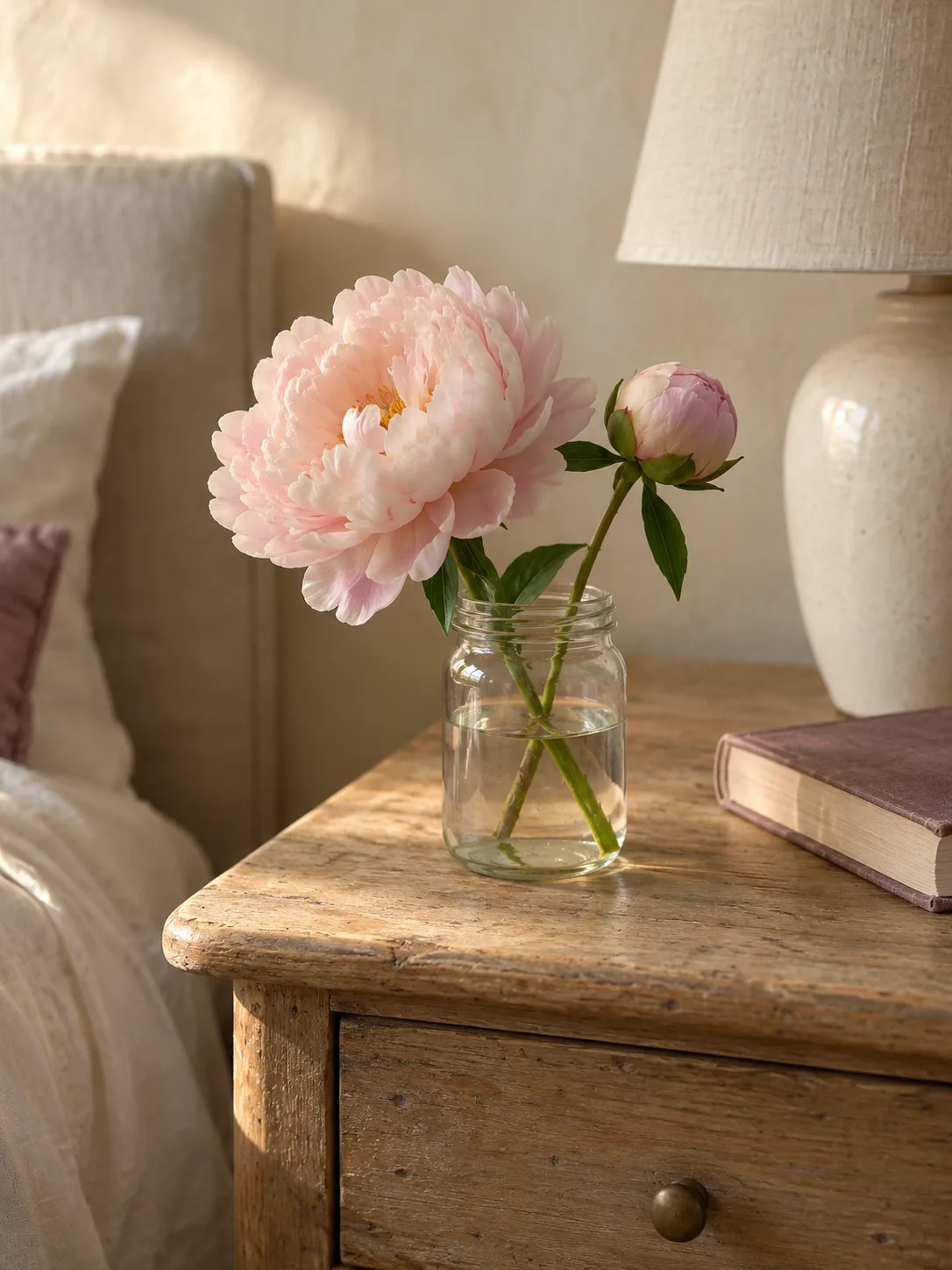
The quiet bedside jar
One open flower and a bud are enough. A small jar keeps the arrangement intimate; leave the rest of the bedside surface easy to use.
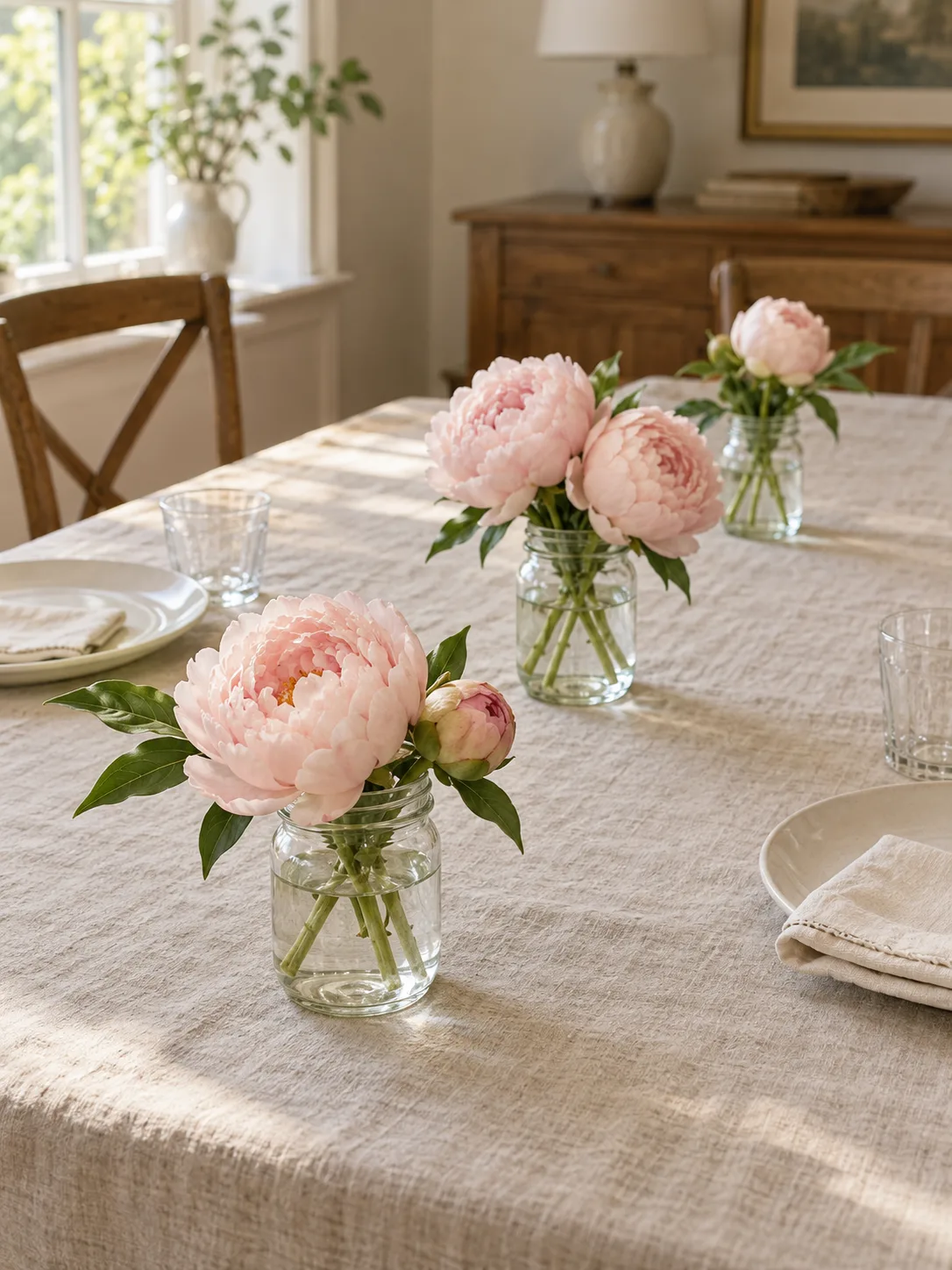
The relaxed lunch table
Spread three low jars between the place settings. Vary the number of blooms and keep enough clear table space for the people and the meal.
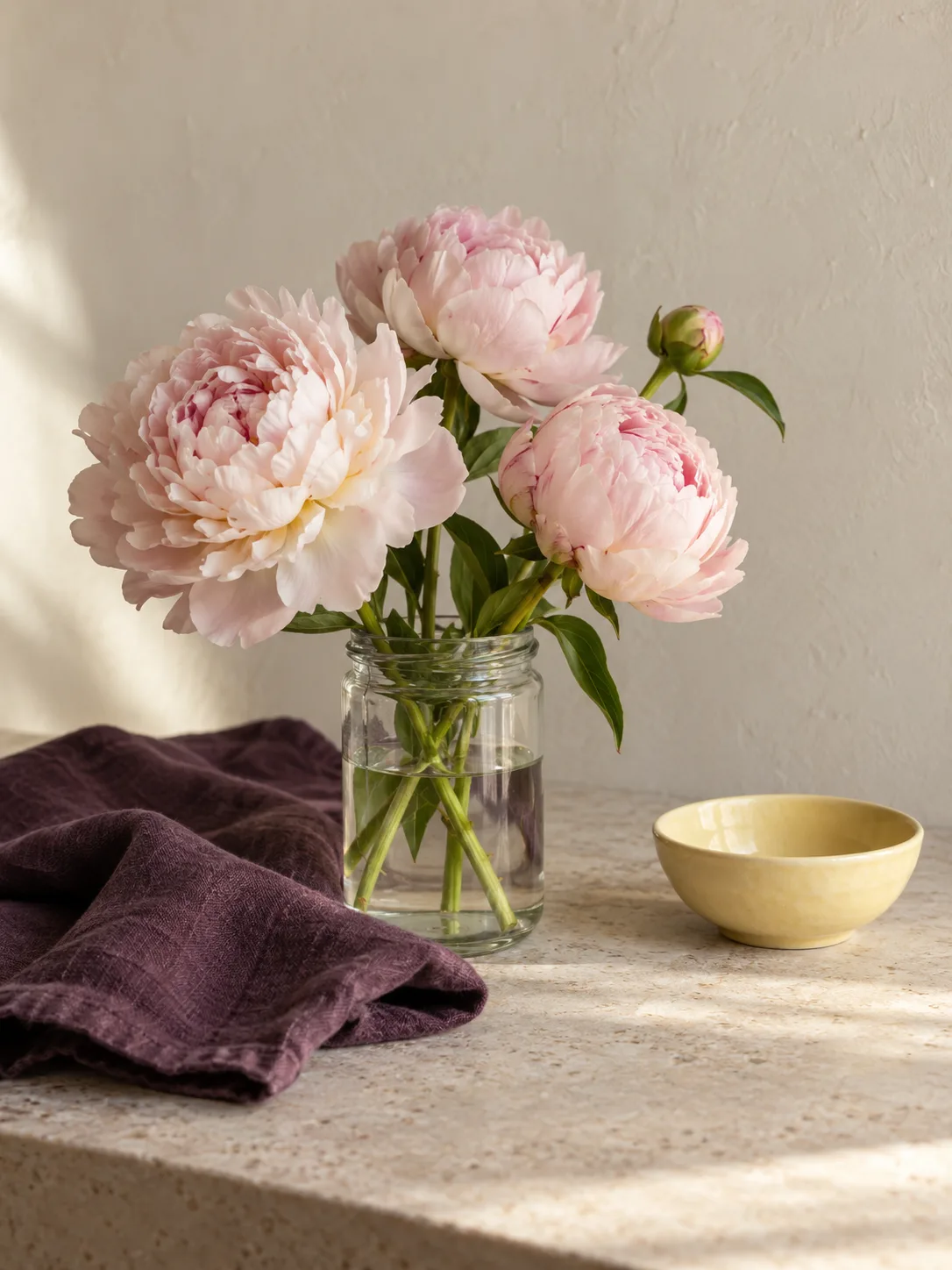
A little color conversation
Let blush petals meet a single plum textile, then add one small butter-yellow accent. A repeated color gives the flowers a setting without crowding them.
Before calling it finished, remove one unnecessary accessory and look again. Often the simplest version gives the petals more presence.
Keep it looking lovely
The Royal Horticultural Society’s cut-flower guidance recommends clean vases, proprietary flower food used as directed, and a cool position away from heat. It advises changing water and recutting stem ends every two to four days, with water levels checked between changes. Remove blooms as they fade rather than leaving them to spoil the arrangement.
No arrangement lasts indefinitely, and a very tight bud may not give you the result you imagined. Enjoy the changes: the same jar can look entirely different as petals loosen and stems settle.