Inside this story
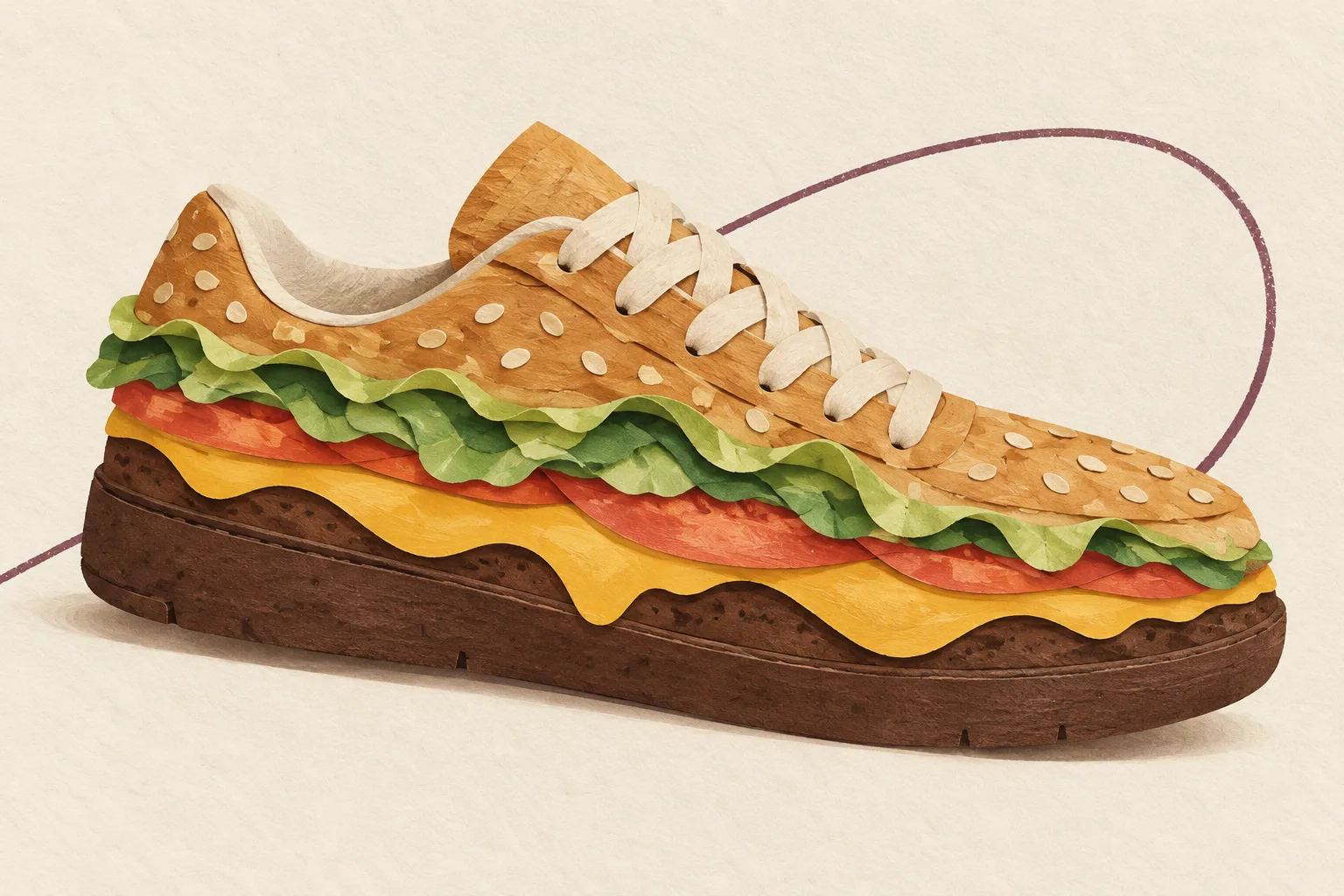
Some objects need a long explanation. A shoe that looks like a hamburger needs about half a second. You see the familiar shape of footwear, then the layers of lunch, and the ordinary object becomes a small visual joke.
That moment of recognition is the appeal. A food-inspired shoe takes two everyday things that normally have nothing to do with each other and asks them to share a silhouette. It is playful design at its most direct: a useful object with an unexpected second identity.
Why the idea reads so quickly
A hamburger already has a strong visual structure. A rounded top, a stack of contrasting layers and an enclosing lower edge are recognizable even in a simplified drawing. A shoe has a similarly readable structure: upper, panels and sole.
Put the two together and those layers start doing double duty. A tan upper can suggest a bun. A thin red accent can suggest tomato. A green edge can read as lettuce. The viewer supplies the rest without needing every ingredient to be reproduced literally.
What makes it charming
The balance is more interesting than the novelty alone. If every surface competes for attention, the idea can become difficult to read. If the food reference is too faint, the surprise disappears. A recognizable base shape, a few deliberate colors and one unmistakable detail are often enough.
Consider the role of texture, too. A sesame-like dot is a different kind of cue from a large lettuce-shaped edge. Small marks can reward a closer look, while the broad silhouette carries the joke from a distance. The same distinction matters in illustrations, stationery and objects for the home.
This is also why a single playful object can be more effective than a whole scene of competing jokes. Give it a little visual breathing room and the idea has space to land.
Try the idea on paper
You do not need to make wearable footwear to explore the design approach. Draw a simple shoe outline, then make three small versions beside it:
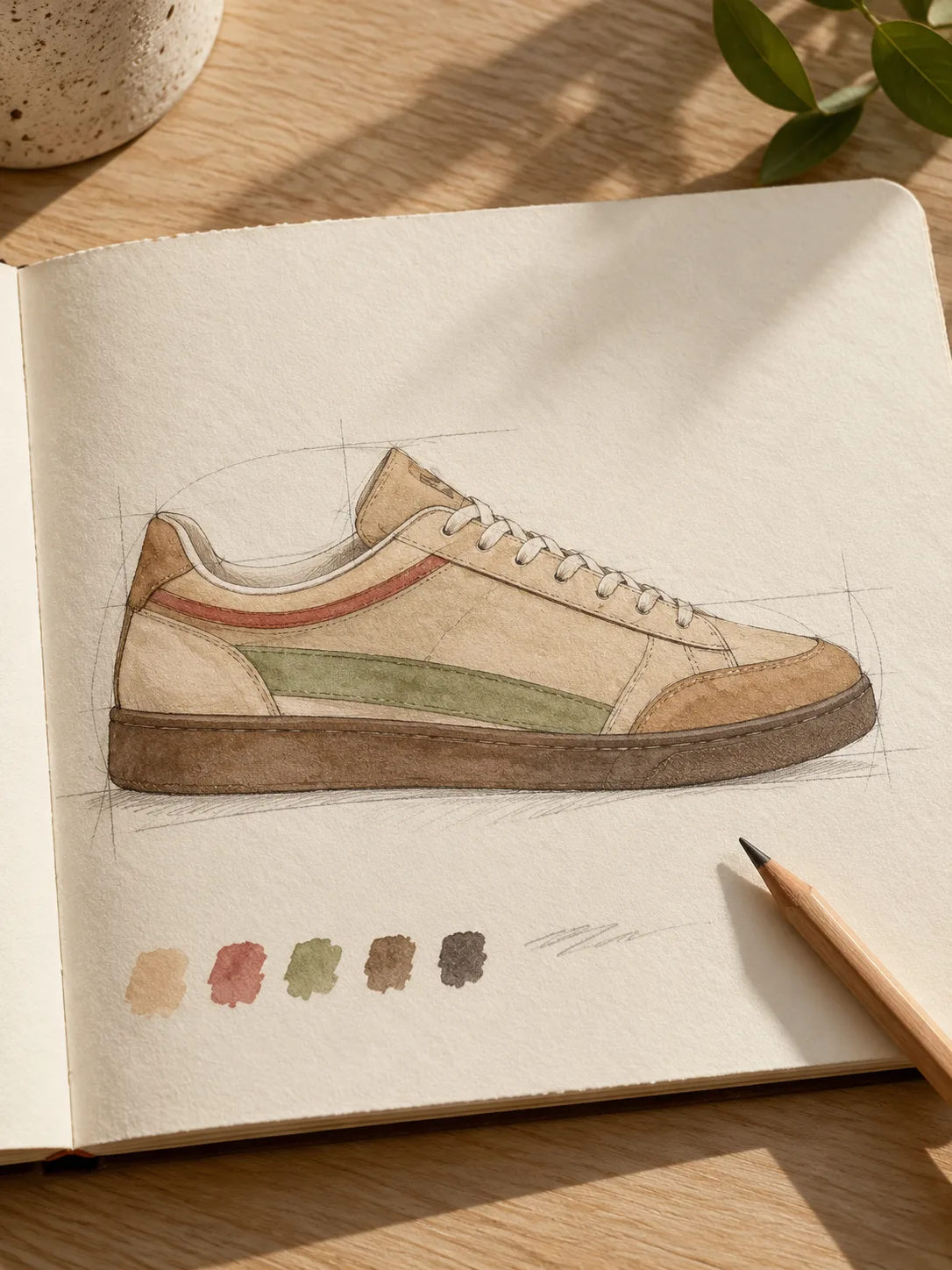
- Keep the outline plain and change only the colors.
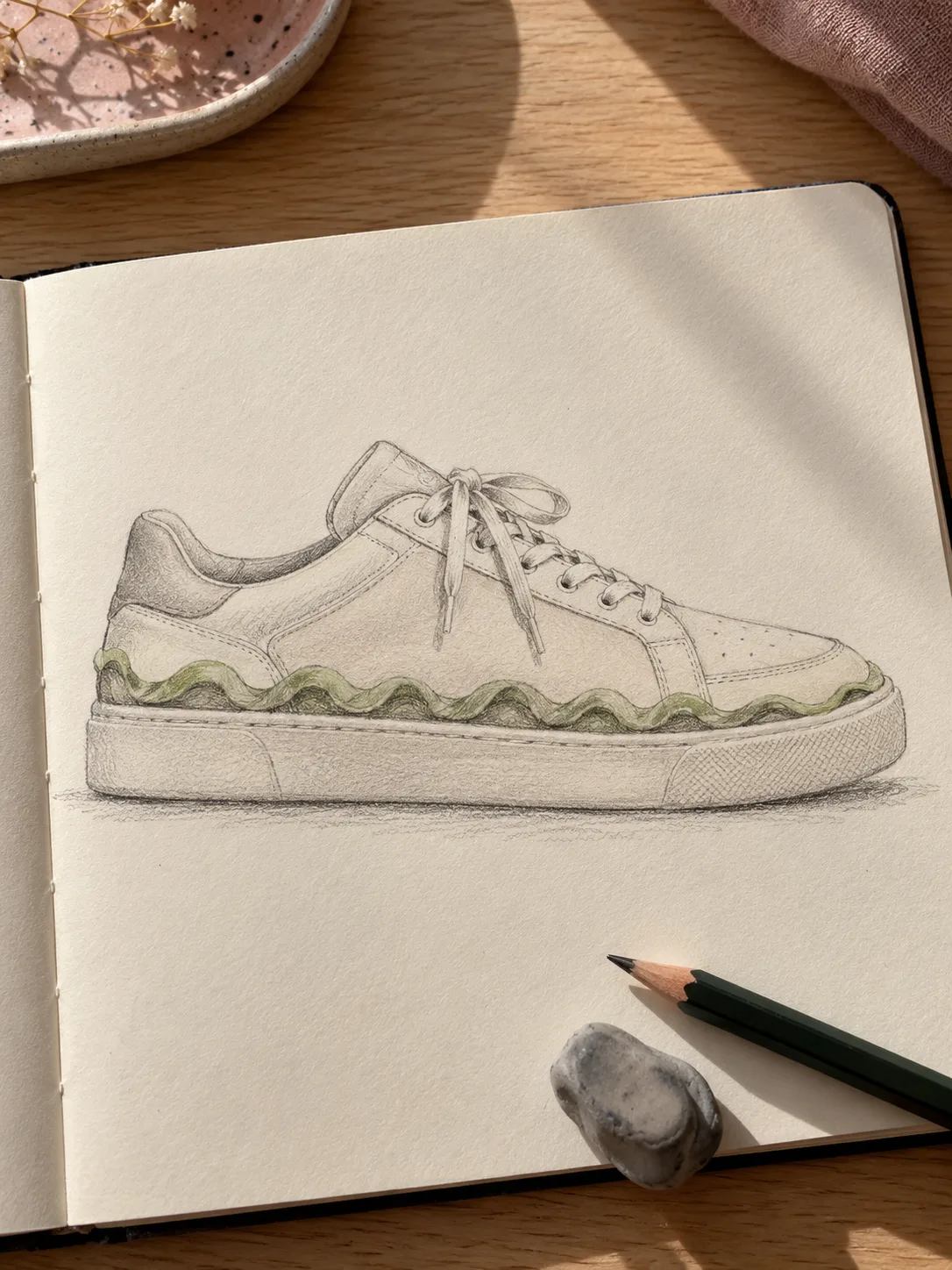
- Keep the colors restrained and change one edge into a food-like shape.
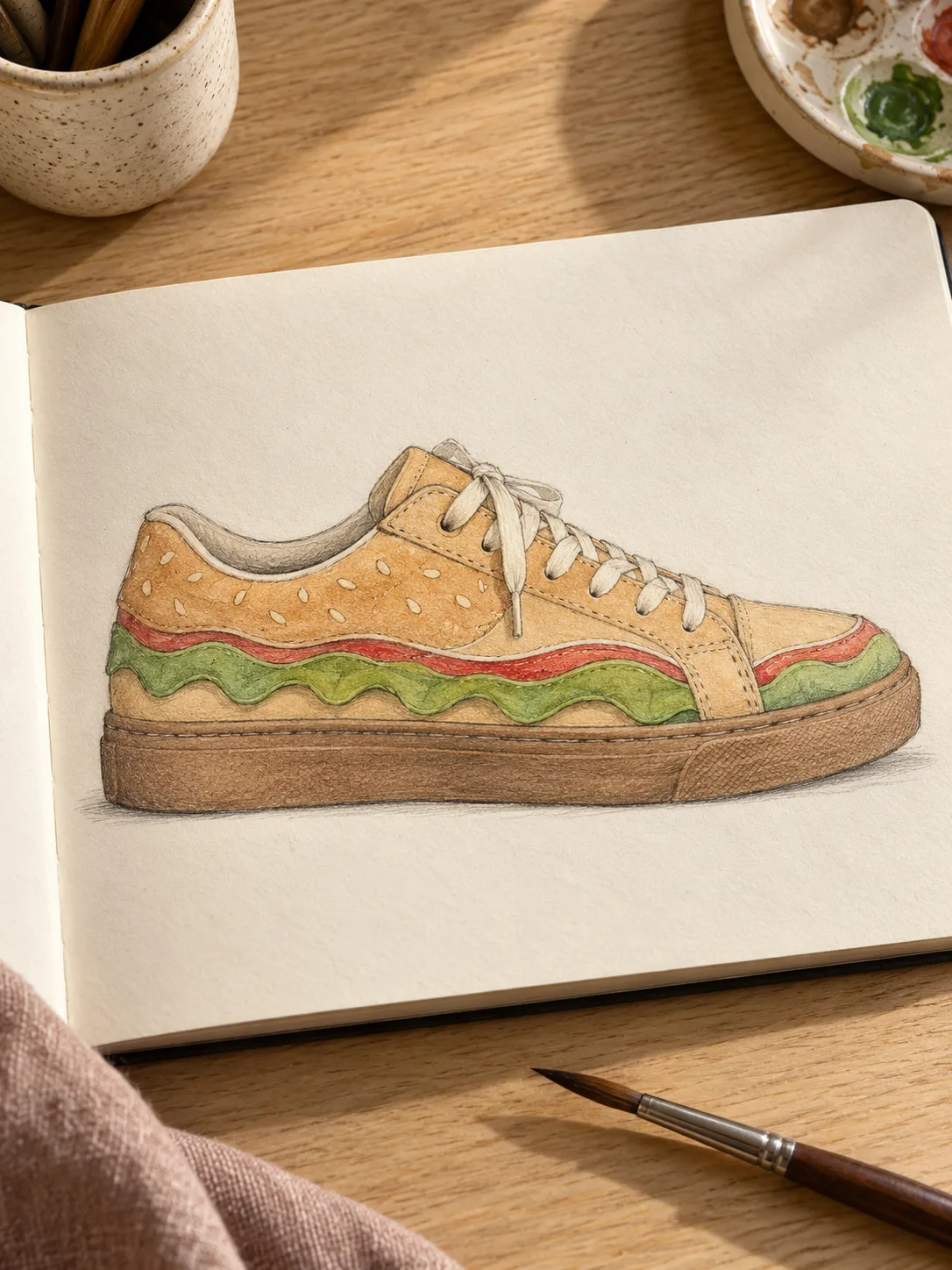
- Combine the clearest color choice with the strongest shape detail.
Swipe to explore, or choose an example below.
Let color lead
Keep the ordinary shoe outline. A bun-like tan, one red accent and a green stripe give the viewer enough cues to make the connection.
Change one edge
Reduce the palette and let one lettuce-like contour carry the idea. The surrounding plain surfaces make that single change easier to notice.
Bring the cues together
Combine the clearest color choice with the strongest contour. Stop before extra details make the two familiar shapes harder to read.
Compare the drawings at thumbnail size. Which one still reads as both a shoe and a food reference? Circle that version before adding extra decoration.
Try a different pairing next: a teapot and a cloud, a pencil case and a banana, or a lamp and a mushroom. The useful question is the same: which feature makes each object recognizable?
Take the idea beyond the sketchbook
Try using your favorite sketch on a greeting card, a notebook cover or a small framed print. Let the main silhouette carry the idea, then add just one or two details that reward a closer look.
A whole collection can grow from the same question: what two everyday things would make an unexpected pair? Keep a little page of combinations and return to the ones that still make you smile the next day.