
In this guide
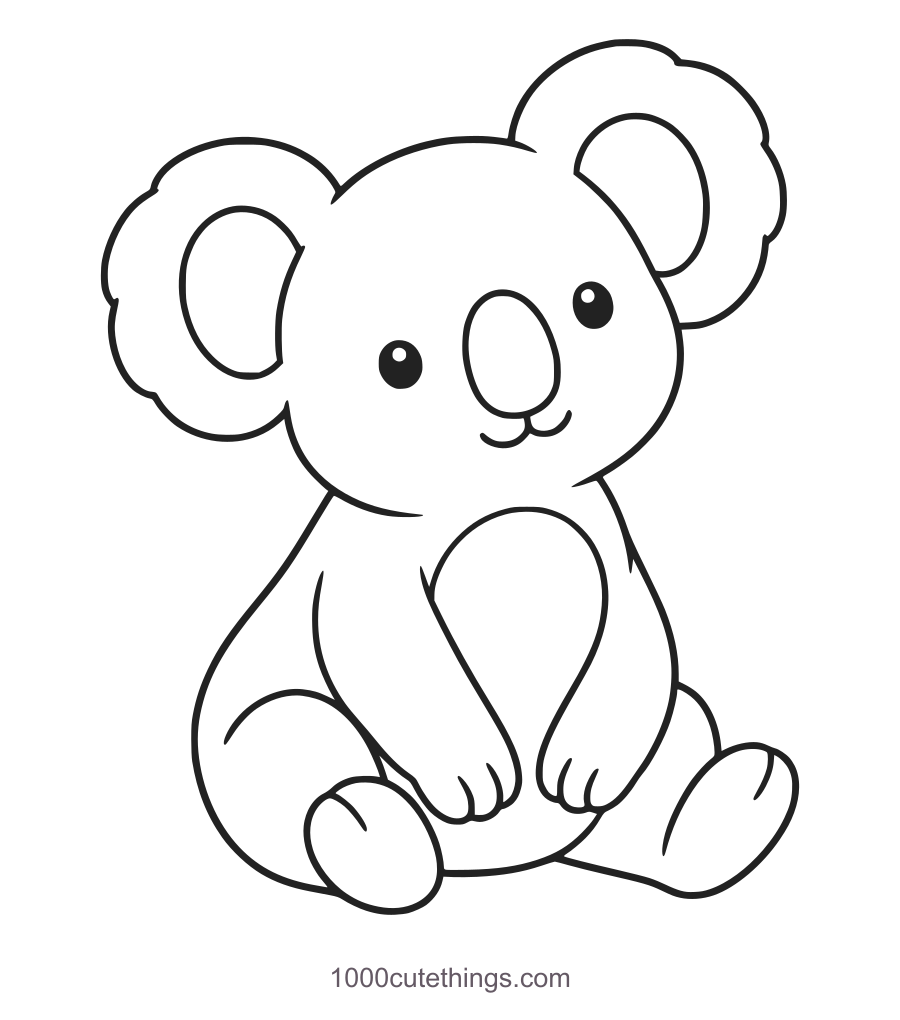
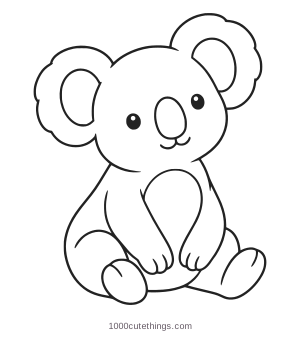
This koala begins with a broad tilted head. Large ears frame the face, while a smaller seated body and outward-facing feet make the pose easy to read. You will add the face near the end, after the main parts fit together.
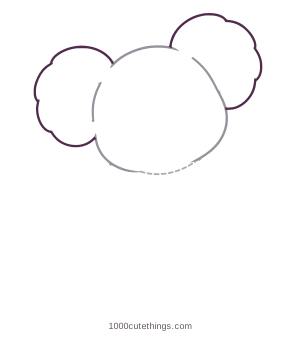
Use a pencil and eraser for the construction stages. The pale dashed edges show which temporary parts to remove as the ears and body overlap the head. The finished drawing has smooth outlines and open coloring areas.
Plan the seated pose
Leave generous space on both sides of the head for the ears. Mark the center of the head and the bottom of the seated body lightly. The head is wider than the body; if you make the torso as wide as the ears, the pose will become heavy before you reach the paws.
Notice that the face tilts as a whole. The nose and eyes follow that angle. Avoid placing the ears on a tilted head and then setting both eyes on an unrelated horizontal line.
PDF links open in a new tab.
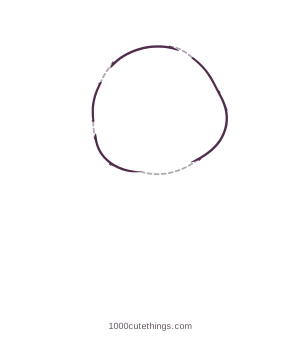
Draw it in six stages
Dark plum marks are new. Solid gray marks show what you drew earlier. Pale dashed marks are temporary construction guides: erase them where the instructions say an overlapping part covers them.
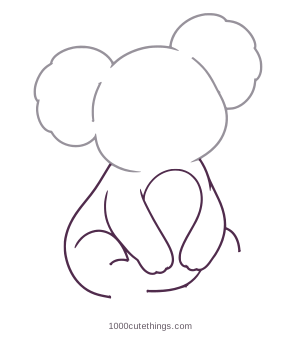
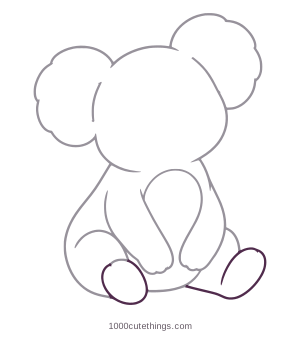
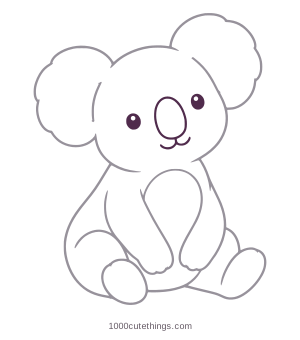
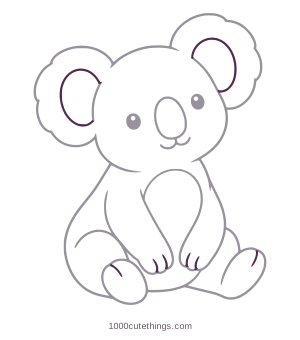
Check the finished shape. The head is wider than the body. Keep the paws separate. Erase temporary dashed guides as the new parts overlap.
Make a second version. Try two closed eyes or a straighter head tilt on your next drawing.
Keep the paws connected
The forearms come down in front of the body. The two hind feet sit outward beside them and must connect to the haunches you drew earlier. Trace each limb with your eye: you should be able to follow it back into the seated pose.
If the paws run together, work on their outer edges before adding toe divisions. Leave a clear separation between the two front paws. A few short toe marks are enough; extra lines will make the feet harder to read at a small size.
When adding the face, place the oval nose first and compare the space on either side before finishing the eyes. Keep the mouth curves short. If the expression feels crowded, move the facial features slightly farther apart rather than shrinking them into tiny marks.
Give the koala another expression
Try closed eyes in a second drawing, or straighten the head a little. Keep the ear size and the seated body similar so you can see what that one change does to the character.
For coloring, use one gray for the main body and a lighter shade or white for the inner ears and belly. An imaginative palette works too. Use the large outline in the printable pack if you want to concentrate on color, or return to the drawing hub for another subject.
The tulip offers a different kind of practice with long leaf curves; the flamingo focuses on a narrow neck and a balanced standing pose.