
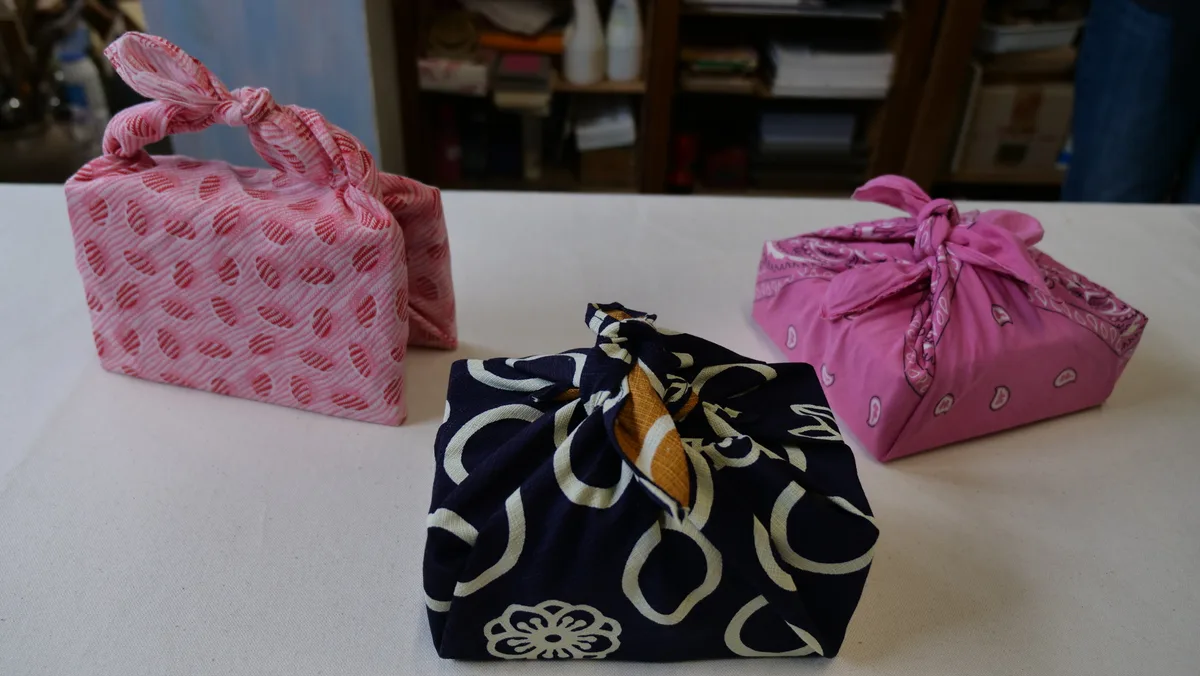
Inside this story
A small present tied in cloth has a lovely moment built into it. The recipient loosens the knot, the corners unfold and the fabric becomes a soft backdrop for whatever is inside.
Furoshiki is Japanese cloth wrapping. For an approachable first attempt, choose a small rectangular box, a square of fabric and a simple tied wrap. A notebook, boxed mug or small craft kit gives you a manageable shape while you learn how the fabric falls.
You do not need to make every gift look like a different tutorial. One basic wrap can feel playful, quiet or celebratory through the cloth you choose and a small detail tucked beside the knot.
Choose the cloth around the gift
Begin with the actual object. If it is soft, fragile or an awkward collection of loose pieces, put it in a suitable box first. The cloth supplies the wrapping; it does not replace cushioning or a secure container.
Use a clean square with finished edges. A purpose-made furoshiki is one option, but a suitable scarf or square cloth you already own may work. Start with fabric that is supple enough to tie yet substantial enough to cover the contents without strain.
Set the box diagonally on the cloth and bring opposite corners over it before making a knot. They should reach comfortably, leaving enough length to tie. If you have to stretch the fabric or hold the box down, try a larger square.
For guidance beyond a trial fit, Japanese maker Musubi’s size and wrap guide matches different wraps to box shapes. Its basic gift wrap, otsukai tsutsumi, is a useful starting point. The maker also provides demonstration videos if you prefer to see the fabric handled.
Make a basic box wrap
Work on a flat surface with enough room to spread the cloth completely. Before wrapping the real present, practice with the empty box so you can retie it without rushing.
- Lay the cloth as a diamond. Put the side you want on the outside face down. Set the box in the center with its edges angled against the cloth’s diagonals.
- Fold the near corner across the box. Smooth it gently over the top; tuck excess fabric neatly rather than crushing it into a lump.
- Fold the opposite corner over it. Check that the gift is covered, including the sides.
- Gather the two remaining corners above the box. Ease the side fabric into place so there are no large gaps.
- Tie a square knot. Cross the right end over the left and tuck it under; then cross the left end over the right and tuck it under. Tighten evenly without pulling the fabric against a sharp box edge.
- Set it down and check it. Adjust the ends and inspect all sides. Carry the finished gift supported underneath, especially if the contents are heavy or fragile.
The Japanese Ministry of the Environment’s furoshiki guide shows the basic wrap alongside other shapes. Use its diagrams when you move on to a different kind of parcel; a bottle wrap needs its own method.
Three ways to make it your own
A small pattern with one plain tag
Choose a fine floral, dot or geometric pattern and keep the name tag simple. Pick one color from the fabric for the tag or handwriting. The knot already gives the parcel a sculptural top, so another large bow is usually unnecessary.
A quiet cloth and a personal note
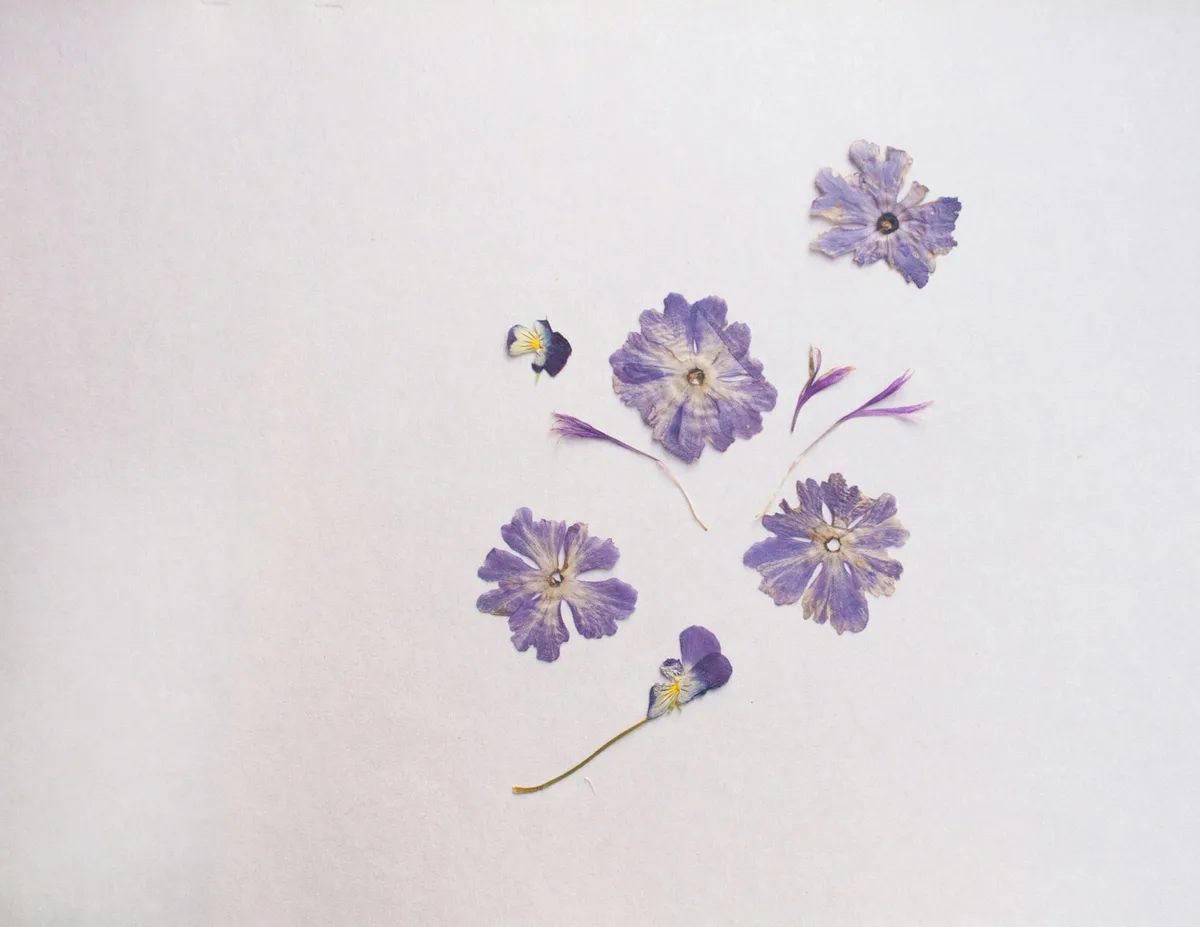
Let a solid or lightly textured fabric frame a small handwritten card. Put the note where it is easy to remove before untying. For a book gift, add a pressed-flower bookmark in its own protective paper sleeve beside the gift rather than bending it into the knot.
A contrast peeking through
A reversible cloth can show a second color in the knot’s ends. Adjust the fold until a little of the reverse appears. Make the contrast the finishing detail: a simple two-color relationship can be more distinctive than a handful of added ornaments.
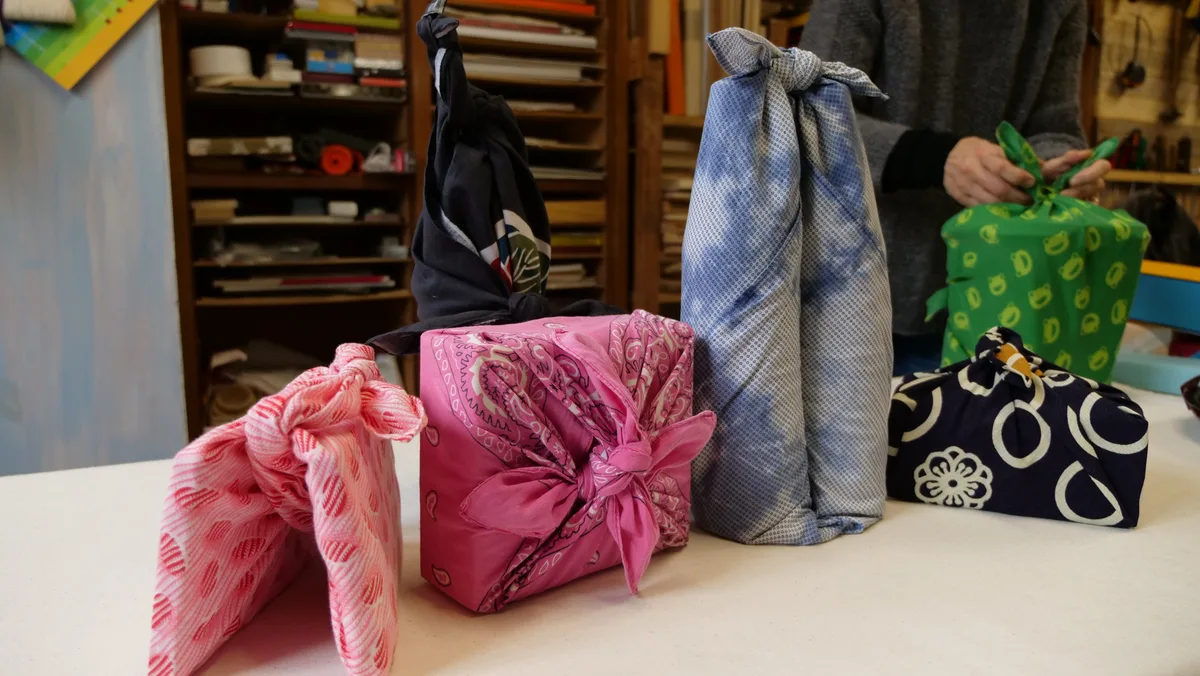
Solve the awkward parcel
| What happens | What to change |
|---|---|
| The corners barely meet | Use a larger cloth or choose a smaller box. |
| A huge knot hides the whole gift | Try a smaller or less bulky cloth while keeping enough length to tie. |
| The sides gape open | Recenter the box and smooth the side folds before tightening. |
| The ends will not stay where you want them | Accept their natural drape or try a fabric with a different weight. |
| Several small items shift independently | Put them in a fitted box before wrapping. |
Do the practical check before the styling check. The gift should be covered and supported before you spend time arranging the knot’s ends.
Make the second use easy
If the cloth is part of the gift, say so in the note. Suggest an ordinary next use that suits its material: wrapping another present, carrying a small boxed lunch or storing a craft project. Include the care instructions if they are known.
If you intend to take your own wrapping cloth home, make that clear kindly when presenting the gift. The important part is avoiding uncertainty about whether the recipient should return it.
Reuse is a habit rather than a look. A cloth that gets used repeatedly has a more convincing purpose than an elaborate square bought for one photograph and left in a drawer. Start with what you can keep in circulation.
Fabric wrapping questions
Can I use a tea towel?
Try a thin, square one if it reaches and ties comfortably. A thick rectangular towel behaves differently from a square furoshiki. Test it around the box before relying on this method.
Should I tape the cloth?
This basic wrap holds with its folds and knot. If it needs tape to keep it closed, revisit the fit or select a method suited to the shape. Tape can also leave residue on fabric.
Can I send it through the mail?
Put the wrapped gift inside suitable shipping packaging. The cloth is presentation wrapping, not a substitute for the carrier’s required packaging or protection for the contents.

.jpg)
.jpg)